
Hamster Wood Chew Toys: 12 Best Enrichment Review
Estimated reading time: 8 minutes

- Hamster wood chew toys can help reduce boredom, support tooth wear, and add safer chewing outlets.
- The YIXUND Hamster Toys set includes 12 pieces with mixed textures, hideout-style items, and movement-based enrichment.
- Rotation works best: introduce a few toys at a time and swap them to keep your hamster interested.
- Not every item will appeal to every hamster, but the variety makes the set more engaging than a single chew stick.
- Natural materials like apple wood, bamboo, hay, and woven grass are a strong fit for small pet enrichment.
If your pet keeps gnawing cage bars, shredding bedding too fast, or turning every quiet evening into a mission for mischief, hamster wood chew toys can make a huge difference. I’ve found that boredom and overgrown teeth often show up together, especially in smaller enclosures or homes that don’t have enough variety. That’s where the YIXUND Hamster Toys come in—a varied set designed to give small pets more to chew, push, hide in, and investigate.
This set is aimed at hamsters, mice, gerbils, rats, guinea pigs, chinchillas, and even rabbits, but for hamster keepers specifically, the mix of wood, hay, wicker, and hideout-style pieces is what stands out. Instead of relying on one chew stick that gets ignored after a day, you’re giving your pet a little activity zone. And honestly, that usually works better.
What Is YIXUND Hamster Toys?
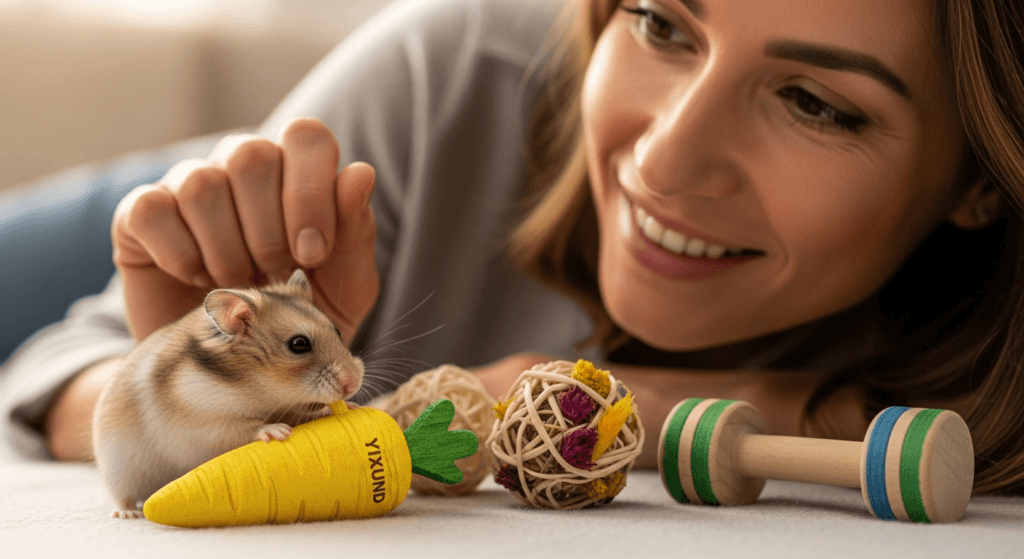
YIXUND Hamster Toys is a 12-piece enrichment set made for small animals that need chewing outlets and more stimulating cage setups. The pack includes a bendable bridge hideout, a seesaw, a woven carrot, wicker ball, apple wood molar string, rolling toy pieces, and timothy hay treats. So rather than being just one chew, it acts more like a mini enrichment bundle.
That matters because many owners are really looking for two things at once: safe chew toys for hamsters and objects that encourage movement. This set tries to cover both. Some items are meant for gnawing, some for pushing around the cage, and some for hiding or climbing.
One thing I noticed from sets like this is that different hamsters latch onto different pieces. Some ignore the bell roller but obsess over the bridge tunnel. Others will drag the hay ball into a corner and work on it for days. That variety is exactly why mixed interactive hamster toys tend to outperform single-item chews in real homes.
Key Benefits & Features of Hamster Wood Chew Toys
A better mix of chewing textures
The biggest strength of these hamster wood chew toys is texture variety. You’re not just getting plain wood blocks. You’ve got bamboo, apple wood, timothy hay, woven grass, and bark-like surfaces. For pets that get bored quickly, that’s a practical advantage.
A hamster may not care about one type of chew but suddenly become very interested in another. I’ve seen pets completely ignore smooth wood and then go wild for rougher natural bark textures.
Encourages natural activity
Look, a bored hamster usually finds something you don’t want chewed. Bars, plastic corners, even the habitat latch if they can reach it. This set includes several interactive hamster toys that encourage nudging, climbing, hiding, and carrying behavior.
The seesaw and little rolling items add movement. The bendable bridge doubles as a tunnel or cover. The wicker ball and carrot toy are lightweight enough for some small pets to toss around, which is actually pretty entertaining to watch.
Supports tooth wear
Rodents need regular opportunities to wear down their teeth. That’s one of the main reasons people search for hamster wood chew toys in the first place. The natural molar pieces in this set are designed to give your pet safer, more appropriate chewing targets than cage accessories or random cardboard scraps.
No toy replaces proper husbandry, of course, but giving your hamster multiple safe chewing options is a smart part of dental support.
Adds enrichment without making the cage feel cluttered
A lot of multi-piece toy sets fail here. They include too much bulk and not enough usable variety. This one does a better job because the pieces are relatively small and can be spread through the enclosure. You can place one under bedding, hang another from the side, and use the bridge as a hideout.
That setup flexibility also makes these hamster wood chew toys useful if you like rotating accessories every few days. Rotation helps keep old items interesting again.
Good balance between natural and playful
Some owners prefer fully natural accessories, while others want toys with visible activity value. This set sits somewhere in the middle. It has the earthy look of handmade hamster toys, but the shapes—like the carrot, seesaw, and rollers—make the enclosure feel more lively.
If you enjoy the look of natural pet habitats, you might also like browsing these bird house designs with a hanging wooden nest for inspiration on wood-heavy pet decor and enclosure styling.
How to Use It Effectively
You’ll get the best results from hamster wood chew toys if you don’t dump all 12 pieces into the cage at once and hope for the best. I prefer a simple rotation method.
Start with 4 to 6 items:
- one main chew piece
- one hideout or bridge
- one rolling or toss toy
- one hay-based treat toy
- one climbing or exploring piece if space allows
Place them in different zones of the enclosure. Put the bridge near a path your hamster already uses. Tuck the hay ball partly under bedding. Leave the seesaw in an open area where it can actually move.
Then watch what your pet does for a couple of days. Some hamsters need time before they interact with new objects. Others start rearranging everything immediately.
If your hamster seems timid, rub a little clean bedding on the toy before introducing it so it smells familiar. For pets that are extra active at night, rotating these hamster wood chew toys every few days often keeps interest high.
And don’t underestimate food-based enrichment. You can borrow ideas from general pet feeding variety too—even if the species differ. I like seeing how other pet categories approach enrichment, and this guide to high-quality wet dog food variety packs is a good reminder that variety often improves engagement across animal care routines.
Pros & Cons
Pros
- Strong variety in one set — You get chew sticks, woven toys, hay treats, a hideout, and movement-based pieces.
- Useful for enrichment rotation — These hamster wood chew toys are easy to swap in and out instead of leaving the same setup untouched for weeks.
- Natural materials are appealing to many small pets — Apple wood, bamboo, hay, and woven grass tend to be more attractive than hard plastic toys.
- Includes both chewing and hiding options — That combination helps with activity and security, which is a nice bonus in one package.
- Works for multi-pet households — If you keep different small animals, some pieces may suit more than one species.
Cons
- Not every item will interest every hamster — That’s normal, but it does mean your pet may pick favorites and ignore a few pieces.
- Small pieces require sensible placement — In very cluttered cages, some toys can get buried or overlooked unless you place them intentionally.
- Best for supervised first introduction — As with any natural toy set, it’s smart to inspect pieces for wear and make sure they suit your hamster’s size and chewing style.
How It Compares to Alternatives
Plain chew sticks are the most basic alternative. They’re inexpensive and fine for tooth wear, but they don’t do much for exploration. If your hamster gets bored easily, a single stick usually won’t hold attention for long. That’s where hamster wood chew toys in a mixed set have the edge.
Plastic playsets are another option. Some are colorful and fun to watch, but I usually prefer natural materials for chewing-focused enrichment. Plastic may add activity, yet it doesn’t always satisfy that need to gnaw. And for some owners, the look is less natural in a carefully designed enclosure.
Then there are DIY options and hamster homemade toys. I’m actually a fan of simple homemade enrichment—plain cardboard tunnels, untreated paper stuffing, and safe wood pieces can work well. But not everyone has time to build and replace them constantly. A ready-made set like this gives you the feel of handmade hamster toys without the prep work.
So where does this product land? For me, it sits between basic chew sticks and full DIY enrichment. It offers more variety than the first, and less hassle than the second.
Expert Tips for Pet Owners
Here’s the thing: even the best hamster wood chew toys work better when the rest of the enclosure is set up well.
Check escape risks before adding climbing pieces
A bridge or seesaw can become a step-up point if your cage has a weak lid or low sides. This old but still useful post on hamster escape routes and setup mistakes is a good reminder to look at your habitat from your hamster’s point of view.
Learn your hamster’s preferred play style
Some hamsters are tunnel-focused. Others are chewers first. Some just want to shove every object into a new corner by midnight. Watching those patterns helps you choose which pieces to keep in rotation. I also think it helps to read broader care basics now and then, and this veterinarian-approved guide on how to care for a hamster covers the essentials well.
Don’t confuse novelty with quality
A toy can look cute and still be ignored. That’s why practical function matters more than appearance. This is one reason I don’t put much stock in flashy playground-style setups alone, though it’s interesting to see how toy-style habitats are reviewed in posts like this hamster playground review.
Keep an eye on chewing wear and cleanliness
Natural toys don’t last forever. Hay and wicker pieces can get soiled, and wood pieces can splinter over time depending on how aggressively your pet chews. Swap worn items out early rather than late.
Use enrichment as part of a bigger care routine
Good toys help, but they’re only one piece of the picture. Bedding depth, wheel size, hideouts, food variety, and stress levels all matter. For a quick reference, I like this happy, healthy hamsters FAQ because it keeps the basics clear and practical.
Conclusion
If you want a simple way to add more chewing options and daily activity to your setup, these hamster wood chew toys are a solid pick. The variety is the real value here—different textures, a few interactive pieces, and a bendable hideout that gives your pet more to do than just run and sleep. Not every hamster will use every toy, but most will connect with at least a few items, and that’s usually enough to make the cage feel richer and more stimulating.
I’d recommend them most for owners who want natural-looking enrichment without having to make a full batch of hamster homemade toys every week. If you’re ready to try a mixed set, take a look at the YIXUND Hamster Toys, and explore more pet care ideas through our guides above.
FAQ
Q: Do hamster wood chew toys help with boredom?
A: Yes, they can help a lot because they give your hamster more to chew, push, hide in, and investigate. Mixed enrichment usually works better than a single chew stick. The added variety can also reduce unwanted behaviors like bar gnawing.
Q: What is in the YIXUND Hamster Toys set?
A: The 12-piece set includes a bendable bridge hideout, a seesaw, a woven carrot, wicker ball, apple wood molar string, rolling toy pieces, and timothy hay treats. It combines chewing, climbing, pushing, and hiding options. That makes it more than a basic chew-only package.
Q: How should I introduce new chew toys?
A: Start with 4 to 6 items rather than putting everything in at once. Place them in different areas of the cage and watch which pieces your hamster actually uses. If your pet seems hesitant, rubbing clean bedding on the toy can make it feel more familiar.
Q: Are natural chew toys better than plastic?
A: For chewing-focused enrichment, natural materials often have the edge because they better satisfy gnawing behavior. Plastic may add color or activity, but it doesn’t always support tooth wear as well. Many owners prefer natural-looking setups for that reason.
Q: When should I replace natural toys?
A: Replace them when they become soiled, heavily worn, or start to splinter. Hay, wicker, and wood all break down over time depending on chewing intensity. Checking toys regularly helps keep the enclosure safe and clean.

Pingback: How to Pick 3 Proven horse reins Cleaner
Pingback: Why Turtle Pellets Fix 5 Feeding Problems
Pingback: How horse liniment for humans Feels Amazing in 3 Ways
Pingback: Hamster Playpen 12 Panels for Safe Indoor Fun