Turtle Pellets Review: 5 Powerful Feeding Fixes
Estimated reading time: 9 minutes

Key Takeaways
- Turtle pellets can help solve picky eating, unbalanced meals, and messy feeding routines when used as part of a mixed formula.
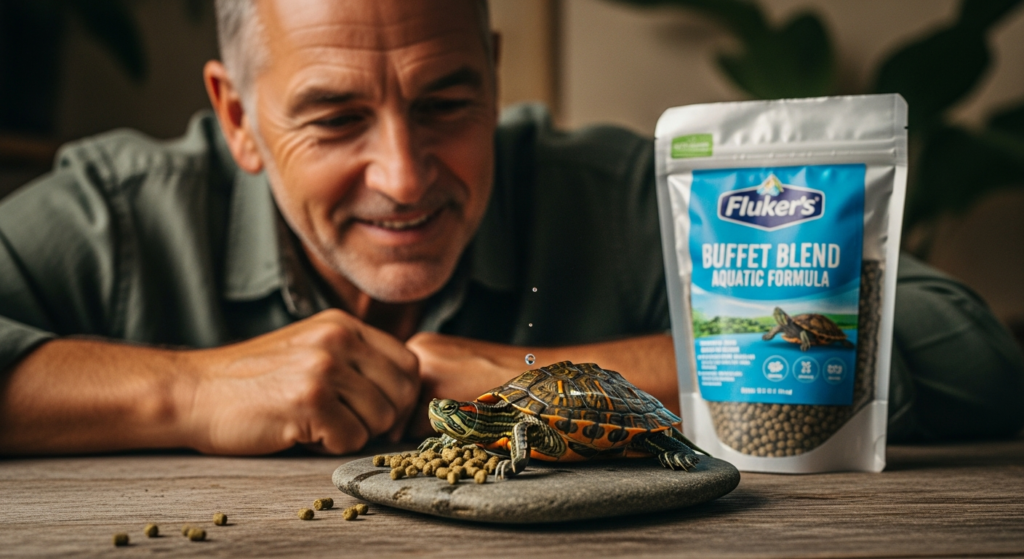
- Fluker’s Buffet Blend combines freeze-dried shrimp, mealworms, and vitamin-enriched floating pellets for aquatic turtles.
- The floating format makes feeding more natural for surface-feeding turtles and can make appetite monitoring easier.
- Calcium support is included, which is useful for shell health and broader turtle diet planning.
- The formula is convenient for baby turtles and adults, but it still needs to be paired with greens, UVB, and proper husbandry.
Table of Contents
If your turtle spits food out, ignores greens, or makes a mess every feeding time, turtle pellets can solve more problems than most owners expect. I’ve seen this happen a lot with picky sliders—one day they inhale shrimp, the next day they act offended by anything remotely healthy. That’s where Fluker’s Buffet Blend comes in. It’s a mixed aquatic formula made for turtles that need balanced nutrition without turning every meal into a guessing game.
This blend combines freeze-dried shrimp, mealworms, and vitamin-enriched floating pellets in one container. For many keepers, that matters because turtles often go for texture and movement before nutrition. A food that offers both appeal and balance can make daily feeding much easier. If you’re trying to improve your turtle diet without overcomplicating things, this product is a practical option worth a close look.
What Is Fluker’s Buffet Blend Aquatic Formula?
Fluker’s Buffet Blend Aquatic Formula is a mixed pet turtle food designed for aquatic species, especially common pets like red-eared sliders. Instead of offering only one food type, it combines freeze-dried shrimp, mealworms, and fortified pellets so your turtle gets protein along with added vitamins and minerals.
The floating format is one of the most useful parts of the formula. Aquatic turtles naturally feed at the water’s surface, so floating food tends to match their normal behavior better than sinking foods. That can make a real difference with young turtles and hesitant eaters.
It’s also suitable for different life stages, from baby turtles to adults, which makes it easier if you don’t want multiple foods sitting around. For owners looking for red slider turtle food, the inclusion of calcium is especially helpful because shell health is always part of the bigger feeding picture.
Key Benefits of Turtle Pellets in This Blend
A more balanced meal than treat-only feeding
A lot of turtles love shrimp and insects, but those alone don’t create a complete diet for red eared slider turtles. This blend works well because the pellets help fill the nutritional gaps. You still get the taste appeal of shrimp and mealworms, but the fortified pellet portion adds structure to the meal.
In my experience, this is where many feeding problems start to improve. Owners often rely too heavily on “fun” foods, then wonder why their turtle becomes selective. A mixed formula helps bring that back into balance.
Floating turtle pellets are easier for aquatic turtles to eat
The floating design makes feeding more natural and cleaner. Turtle pellets that stay on the surface are easier for many aquatic species to spot, chase, and bite. That matters for baby turtles that are still learning feeding patterns and for adults that prefer surface feeding.
One thing I noticed with floating foods in general is that you can also monitor appetite better. If food is disappearing too fast or being left behind, it’s easier to judge portions and behavior.
Calcium support helps with shell health
Shell condition reflects more than just one nutrient, but calcium is still essential. This formula includes calcium support, which is useful for growing turtles and adults alike. If you’re feeding a slider, that added support fits nicely into a broader turtle diet that should also include proper UVB exposure and basking.
Food won’t fix husbandry mistakes by itself, of course. But a blend with calcium is a smarter base than random snack feeding.
The variety helps picky turtles stay interested
Honestly, some turtles get bored fast—or at least they act like they do. The mix of shrimp, mealworms, and pellets gives enough variety to hold interest without forcing you to hand-feed separate items every day. If your turtle tends to sort through food, this blend may still not stop every picky habit, but it usually gives you a better chance than plain pellets alone.
And for keepers transitioning from treat-heavy feeding, this can be a gentler step.
Works for small turtles and adults
Feeding one food across growth stages is convenient. Younger turtles often need more protein, while older sliders usually need more plant matter in the overall diet, but a floating mixed food like this can still serve as a reliable staple component. That makes these turtle pellets useful in homes with more than one turtle of different ages.
How to Use It Effectively
The best results usually come from using this food as part of a complete routine, not as the only thing your turtle ever eats.
Start with a small portion your turtle can finish in a few minutes. Overfeeding is incredibly common with aquatic turtles, and leftover food can dirty the water fast. Because this mix includes shrimp and mealworms, it’s tempting to pour in extra—but less is usually better.
I prefer offering turtle pellets and the mixed pieces in a feeding area where I can actually observe what gets eaten. If your turtle only hunts for shrimp at first, don’t panic. That’s normal. Keep portions controlled so the pellet portion remains part of the meal rather than background clutter.
You can also rotate in vegetables depending on your turtle’s age and species. If your pet refuses greens, I’d strongly suggest reading this guide on tricking turtles to eat vegetable and cuttlebone. It’s one of those practical resources that makes life easier.
For owners who enjoy building a richer pet care setup overall, I also like browsing ideas outside reptile supplies sometimes—good pet routines tend to spill into the rest of the home. Petsfloo has a fun post on hamster wood chew toys for small pets that shows the same kind of enrichment mindset.
- Feed only what your turtle will eat promptly
- Remove leftovers if needed to protect water quality
- Pair the food with proper UVB, heat, and basking access
- Add greens regularly for adult sliders
- Watch body condition, not just enthusiasm at feeding time
Pros & Cons
Pros
- Combines shrimp, mealworms, and fortified pellets in one food
- Floating format suits aquatic feeding behavior well
- Includes calcium support for shell development
- Helpful for picky turtles transitioning from treat-heavy feeding
- Suitable for baby turtles and adults
- Convenient choice for owners who want balanced pet turtle food without juggling several containers
Cons
- Some turtles may pick out the shrimp and ignore the pellets at first
- It won’t replace the need for vegetables in an adult slider’s overall diet
- Mixed foods can encourage selective eating if portions are too large
- The floating pieces may break apart if left in water too long
None of those downsides are deal-breakers. They just mean you’ll get better results if you feed with intention instead of free-dumping food into the tank.
How It Compares to Alternatives
Compared with single-ingredient dried shrimp, this formula is a much better everyday option. Shrimp-only products are usually more like treats than a balanced staple. Turtles love them, sure—but love and nutritional value aren’t always the same thing.
Compared with plain pellet foods, this blend often wins on acceptance. If your turtle already eats pellets well, a basic pellet-only formula may be simpler. But for fussy eaters, the added shrimp and mealworms can help bridge the gap. That’s one reason these turtle pellets stand out for households dealing with stubborn feeding habits.
Against fresh-food-only approaches, this product is easier to portion and store. Fresh items absolutely have a place in a healthy diet for red eared slider turtles, but relying on fresh proteins alone can become inconsistent. A fortified base food gives you more nutritional reliability.
So where does this blend fit best? I’d recommend it for owners who want a convenient staple with enough variety to keep turtles interested—especially if plain pellets have been a struggle.
Expert Tips for Pet Owners
Look, even the best turtle pellets won’t help much if the whole feeding plan is off. A few habits make a big difference.
1. Learn what your species should and shouldn’t eat
This detailed post on what turtles should eat and avoid is a smart starting point. There’s also a related version of the same topic with extra discussion in the comments on what to eat and what not to eat for turtles. If you’re new to turtle care, both are worth your time.
2. Match feeding to age
Baby turtles generally lean more carnivorous, while adults—especially sliders—need more plant matter. The Red-eared Sliders care PDF gives useful background on species-specific care. That’s important if you’re choosing red slider turtle food and wondering why your juvenile and adult don’t act the same at mealtime.
3. Use variety, but don’t create a spoiled eater
I like mixed foods because they encourage acceptance, but moderation matters. If every meal is mostly treats, your turtle will probably hold out for the tastiest bits. The site Favorite Foods That Your Turtles Like To Eat is handy for understanding food preferences, but use that knowledge to build balance—not just indulgence.
4. Don’t ignore husbandry
Poor basking temperatures, weak UVB, and stress can all reduce appetite. Owners sometimes blame the food when the real issue is environmental. If your turtle suddenly stops eating, check the setup before switching foods three times in a week.
5. Keep your broader pet care habits thoughtful
This may sound unrelated, but good pet ownership is usually consistent across species—routine, enrichment, and proper setup matter. I had the same thought reading these bird house design ideas for wooden nests: the details of habitat shape behavior more than people think.
Conclusion
Fluker’s Buffet Blend does a solid job addressing some of the most common feeding frustrations—picky eating, unbalanced protein-heavy meals, poor food visibility, and shell-support concerns. For many keepers, turtle pellets become much more effective when they’re paired with appealing ingredients like shrimp and mealworms instead of offered alone.
I wouldn’t call this a magic fix for every turtle, because feeding still depends on species, age, and setup. But if you want a convenient, better-balanced staple for aquatic turtles, it’s a sensible option. If you’re ready to try it, take a look at Fluker’s Buffet Blend, and if you want more pet-care ideas after that, explore Petsfloo’s guide to hamster wood chew toys for small pets.
Suggested Slug
turtle-pellets-aquatic-food
Meta Description
See how turtle pellets support balanced nutrition, floating feeding, and shell health for red eared sliders, baby turtles, and adults.
Image Alt Text
turtle pellets with shrimp and mealworms in aquatic turtle food blend
FAQ
Q: What makes Fluker’s Buffet Blend different from plain turtle pellets?
A: Fluker’s Buffet Blend combines freeze-dried shrimp, mealworms, and fortified pellets in one formula. That gives it more variety and better acceptance for picky turtles than plain pellet foods alone. It also keeps the meal more balanced than treat-only feeding.
Q: Are floating turtle pellets better for aquatic turtles?
A: Floating turtle pellets often work well because aquatic turtles naturally feed at the water’s surface. They are easier to spot, chase, and bite, especially for young turtles and hesitant eaters. Floating food can also make feeding behavior easier to monitor.
Q: Does this food help with shell health?
A: Yes, the formula includes calcium support, which is helpful for shell development and maintenance. That said, shell health also depends on proper UVB exposure, basking, and overall husbandry. Food supports the turtle, but it does not replace a good setup.
Q: Can baby turtles and adult turtles eat the same blend?
A: Yes, this blend is suitable for different life stages, from baby turtles to adults. Younger turtles often need more protein, while adults usually need more plant matter overall, so this food works best as part of a broader feeding routine. It can still be a convenient staple component across ages.
Q: Why might my turtle pick out the shrimp and ignore the pellets?
A: Many turtles are selective and will go for the tastiest pieces first. That is normal with mixed foods and treat-heavy diets. Keeping portions small and consistent helps ensure the pellet portion stays part of the meal instead of being left behind.
Q: Do turtle pellets replace vegetables for adult sliders?
A: No, they do not replace vegetables in an adult slider’s overall diet. A balanced turtle diet should still include greens, especially for older sliders. Turtle pellets are best used as a convenient staple alongside plant foods and proper care.