Tetrafin Goldfish Flakes: 3 Essential Feeding Guide Tips
Estimated reading time: 7 minutes

★★★★★
4.7 (25806)
4.7 (25806)
8.97
8.97
8.97

Estimated reading time: 7 minutes
If your goldfish always seem hungry, your water gets cloudy fast, or you’re not sure whether you’re feeding too much, you’re not alone. tetrafin goldfish flakes are often one of the first foods fish keepers try because they’re simple, widely used, and designed as a daily staple for goldfish and small koi. That’s exactly where TetraFin Goldfish Flakes fit in — a straightforward flake food made to provide balanced nutrition without making feeding feel complicated.
I’ve found that goldfish owners usually want three things from a staple food: easy feeding, dependable digestion, and less mess in the tank. This formula is built around those priorities. It includes vitamins, minerals, trace elements, and added vitamin C, plus an immune-support blend meant to help fish handle everyday stress. For beginners, that’s reassuring. For experienced keepers, it’s a practical baseline food that can work well in a regular rotation.
tetrafin goldfish flakes are a complete daily flake food made for goldfish and small koi. The formula is meant for routine feeding in home aquariums, and it can also be used outdoors in small ponds. If you’ve been looking at tetra goldfish flakes and wondering whether they’re just another generic flake, the short answer is no — they’re specifically formulated for cold-water fish with goldfish-type feeding needs in mind.
The blend includes nutritious ingredients, vitamins, minerals, and trace elements to support general health and natural color. It also uses the brand’s ProCare formula, which combines immunostimulants, biotin, vitamins, and omega-3 fatty acids. That sounds technical, but the everyday takeaway is simple: the food is designed to support immune health and help fish better cope with stress.
One thing I appreciate about goldfish flakes tetra formulas like this is the digestibility focus. The flakes are made to be easy for fish to process and to reduce waste when fed correctly. That matters more than many people realize, because dirty water often starts with overfeeding or a food that breaks down too heavily before being eaten.
There’s a reason tetrafin goldfish flakes remain a common staple for casual and serious keepers alike. The formula covers the basics well, and for many tanks, that’s exactly what you want from a daily food.
This food is intended as a staple, not just an occasional treat. It provides a broad nutritional base with added vitamins and minerals, which makes it suitable for everyday feeding. If your goal is to keep feeding simple and consistent, that’s a real strength.
Vitamin C is included in the formula, and that’s a useful addition for goldfish diets. Nutritional support won’t replace good water quality or proper tank maintenance, of course, but it can help support overall health as part of a complete care routine.
The ProCare blend is one of the more notable features in tetra tetrafin goldfish flakes. It includes biotin, omega-3 fatty acids, vitamins, and immunostimulants meant to support long-term health and stress resistance. For fish adjusting to tank changes, temperature swings, or new tank mates, that kind of support can be helpful.
Honestly, this is the feature that most owners notice first. A digestible flake tends to mean less waste, and less waste usually means cleaner water when feeding is controlled. That won’t magically fix poor maintenance, but it does reduce one common cause of cloudy tanks.
If you keep fancy goldfish indoors or small koi in a modest outdoor pond setup, this food can cover both use cases. That flexibility is handy if you have more than one cold-water setup and don’t want to juggle multiple staple foods.
The formula is intended to support naturally brilliant color through nutrition rather than relying only on flashy marketing claims. I always prefer that framing because healthy color in fish usually comes from consistent care, not miracle ingredients.
Using tetrafin goldfish flakes well is less about the product itself and more about feeding discipline. Most feeding problems come from too much food, not too little.
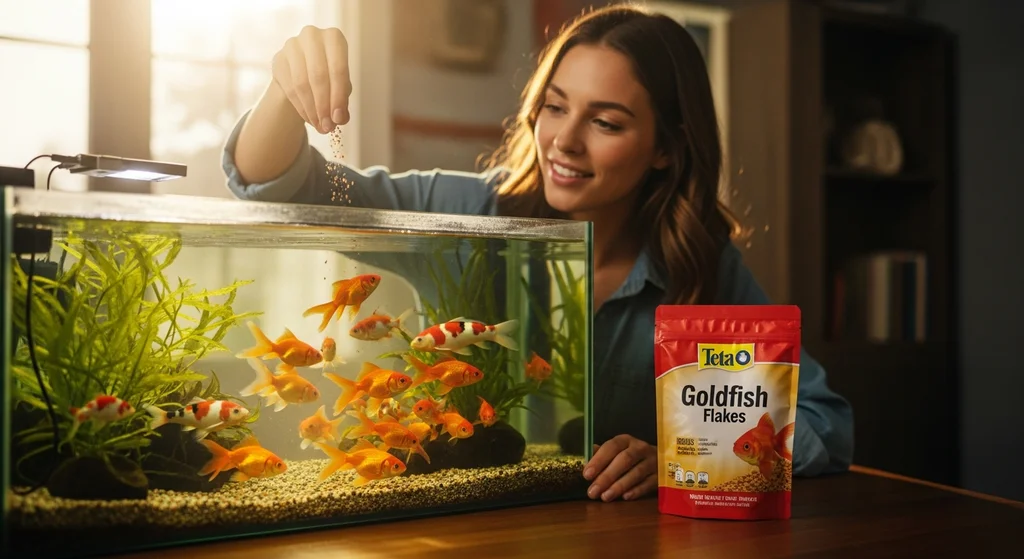
Start with a very small pinch. Feed only what your fish can consume within several minutes, two to three times per day. If flakes are still floating around after the fish lose interest, you’ve probably offered too much. Goldfish are opportunistic eaters — they’ll beg even when they don’t need more.
Feed a small amount, watch the fish closely for two to three minutes, and adjust based on leftovers and activity. That simple habit often does more for tank health than switching foods repeatedly.
Here’s the simple routine I recommend:
If you’re still unsure about frequency, this helpful guide on how much and how often you should feed your goldfish does a nice job breaking down common feeding mistakes. I also like these practical feeding fish FAQs for real-world answers that go beyond the label directions.
One thing I noticed over the years: people tend to underestimate how much diet affects tank cleanliness. The same principle shows up across pet care — even outside aquariums, nutrition and waste management are linked, much like portion control matters in foods discussed in this guide to black oil sunflower seeds for birds.
No staple food is perfect for every setup, and I think it’s more useful to be honest about where this one fits.
tetrafin goldfish flakes work best as a dependable staple food, but they’re not the only format worth considering. Some keepers prefer pellets, others rotate in gel foods, and some use color-focused supplements alongside a base diet. I tend to recommend flakes like this for easy daily feeding, especially for newer keepers, while still acknowledging that alternative formats can make sense depending on your fish and setup.
| Feature | This Product Type | Pellets | Gel Foods | Color Granules |
|---|---|---|---|---|
| Daily staple use | Very convenient | Convenient | Moderate prep | Usually supplemental |
| Water mess risk | Low if portioned | Moderate | Low | Moderate |
| Good for beginners | Yes | Yes | Less so | Sometimes |
| Feeding control | Easy small pinches | Easy measured doses | Best precision | Fair |
| Best for | Everyday goldfish care | Larger eaters | Diet variety | Color support |
If you’ve been comparing flakes to other formats, here’s my take. Flakes are usually easiest for small to medium goldfish and for owners who want quick, repeatable feeding. Pellets can be tidier in some setups and may suit fish that feed more aggressively, which is why browsing these notes on goldfish pellet foods can be useful. Gel foods often appeal to hobbyists who want more control over ingredients and texture; this review of Repashy Soilent Green gives a good example of why some keepers go that route.
But for a no-fuss staple, tetrafin goldfish flakes are still one of the simpler choices. They offer balanced nutrition, broad availability, and straightforward feeding instructions without requiring extra prep.
Look, even the best staple food works better when your overall routine is solid. Here are a few practical tips I’d give any goldfish keeper using tetrafin goldfish flakes.
A good staple can stay at the center of your feeding plan. Variety is useful, but don’t assume you need to replace flakes entirely. In most cases, rotating textures or occasional supplements is enough.
Feeding directions are a starting point. Your fish tell you more. If they finish quickly and stay active, you’re close. If food drifts away or the filter starts catching leftovers, scale back.
Some goldfish are surface feeders. Others do better with a mix of floating and sinking options. If your fish consistently struggle at the surface, it may be worth combining a staple flake with another food style in rotation.
I like practical keeper-written resources because they tend to reflect what happens in real tanks, not just ideal conditions. For example, this R2 Fish School review is useful if you’re interested in broader fishkeeping tools and education.
We’ve all done it — one extra pinch, cloudy water the next day, instant regret. That doesn’t always mean the food is the problem. It usually means the portion was off. With tetrafin goldfish flakes, careful feeding is what brings out the cleaner-water benefit.
If you want a staple goldfish food that’s easy to use, nutritionally balanced, and designed to support cleaner water when fed properly, tetrafin goldfish flakes make a lot of sense. They’re especially useful for goldfish keepers who want a simple everyday formula with vitamin support, immune-support ingredients, and good digestibility.
I wouldn’t say this is the only food worth feeding, because most healthy goldfish do well with some variety. But as a reliable base diet, it checks the boxes that matter most. If you’re thinking about trying a steady daily staple, take a look at TetraFin Goldfish Flakes, and if you want more pet nutrition ideas, explore our guide to black oil sunflower seeds for birds.
A: tetrafin goldfish flakes are a complete daily flake food made for goldfish and small koi. They are designed for routine feeding in home aquariums and can also be used in small ponds. The formula focuses on balanced nutrition, digestibility, and everyday health support.
A: The main benefits include balanced daily nutrition, vitamin C support, immune support through ProCare, and a highly digestible formula that can help reduce waste. It is also suitable for both aquarium goldfish and small koi. Those features make it a practical staple food for many setups.
A: Start with a very small pinch and feed only what your fish can eat within several minutes, two to three times per day. Watch closely for leftovers and reduce the amount if flakes remain in the tank. Careful portion control is the key to cleaner water and better feeding results.
A: Yes, tetrafin goldfish flakes are suitable for goldfish and small koi. The formula is designed for cold-water fish with similar feeding needs. It can work well as a staple in both indoor aquariums and modest outdoor pond setups.
A: Flakes are usually the easiest choice for quick, repeatable daily feeding, especially for small to medium goldfish and beginners. Pellets can be tidier or better for larger eaters, while gel foods may offer more ingredient control and texture variety. For a no-fuss staple, though, flakes remain one of the simplest options.